
How to Build Complete Visual Worlds with AI

A single striking image can carry a project for exactly one post. Anything bigger- a game, a brand universe, an animated series- needs more than one great shot. It needs a whole world that feels like it holds together even when the camera turns somewhere new. That’s a much harder thing to pull off than it sounds, and it’s exactly where an AI image generator starts to prove its worth. Dreamina, running on its latest model Seedream 5.0 Pro, is built with this kind of large-scale visual consistency in mind.
Why one great image never makes a world
A world isn’t one picture; it’s dozens of them agreeing with each other. The lighting in a forest scene needs to match the lighting in the village nearby. A character’s costume style should echo the architecture around them. Miss this and even beautifully rendered individual images start to feel like they were pulled from five different projects and stapled together. Building a world means designing rules first, then generating within them.
What actually needs to stay consistent across a world
Before generating a single scene, it helps to define the rules the whole world has to follow:
- A shared colour palette across every environment
- Consistent lighting logic, time of day, weather, mood
- Architectural or stylistic language that repeats across locations
Once these are locked in, new scenes stop feeling like guesswork and start feeling like extensions of something already established.
Meet Dreamina’s Seedream 5.0 Pro
Seedream 5.0 Pro handles world-building especially well because it treats every image as something built from adjustable parts rather than one flattened output. Point selection, lasso tools, and sketch guidance let you carry specific stylistic details, a texture, a lighting quality, a recurring motif, from one scene into the next.
Layer separation goes further, letting subjects, backgrounds, and effects shift independently so a new location can echo an established one without copying it outright.
With 2K output holding detail across large environmental shots, native text support in 14 languages for in-world signage or lore text, and built-in research keeping stylistic references grounded, it’s a tool suited to sustained, large-scale creative work.
Turning one scene into a whole connected world
This is where the process really starts to feel like building something, not just generating pictures. Here’s how it works inside Dreamina.
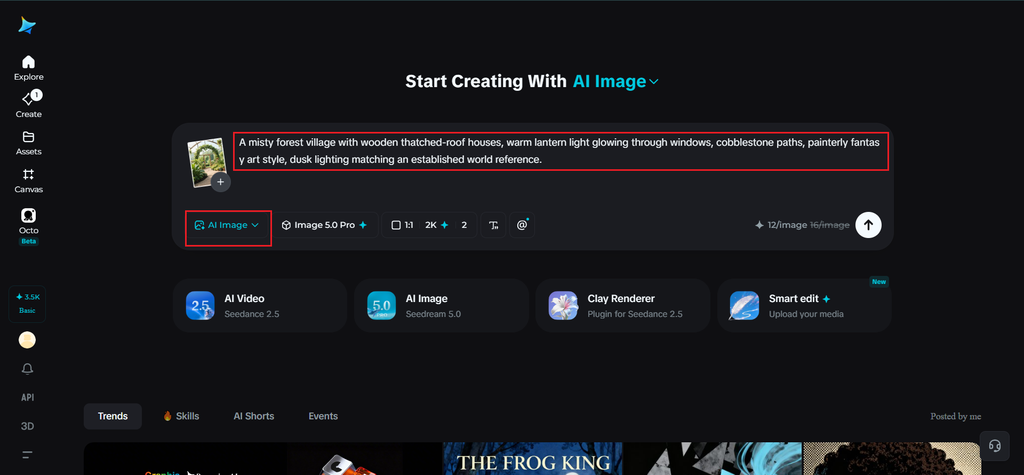
Step 1: Write a text prompt and/or add a reference image
Head to Dreamina and describe the location or scene you’re building with real specificity: setting, lighting, architectural style, overall mood. Upload a reference image from an already-established part of your world, so the new scene has something concrete to match.
A sample prompt might read: A misty forest village with wooden thatched-roof houses, warm lantern light glowing through windows, cobblestone paths, painterly fantasy art style, dusk lighting matching an established world reference.
Step 2: Adjust parameters and generate
Choose Image 5.0 Pro by Seedream 5.0 Pro as your model. Set your aspect ratio and size depending on where this scene will be used, then pick a resolution: 1K for testing whether a new location fits the world, 2K once you’re confident in the direction. Click Dreamina’s icon once it’s set, and let it generate.
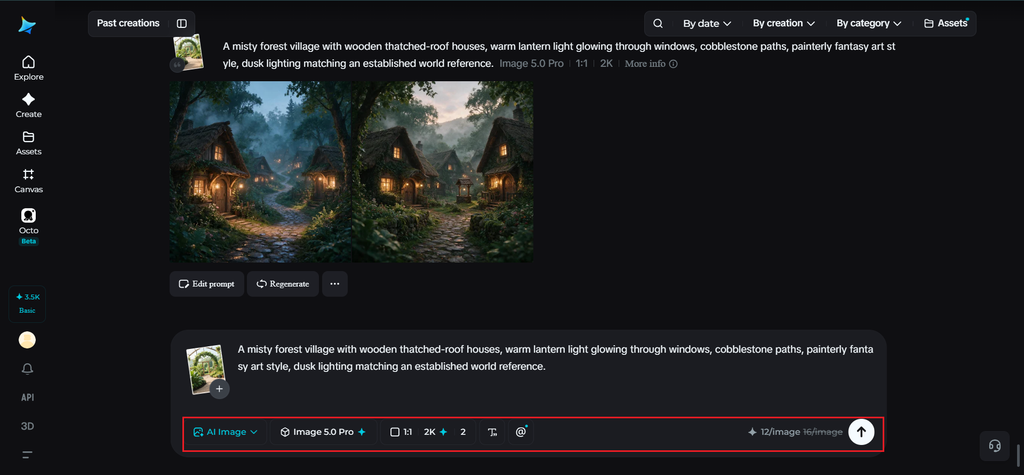
Step 3: Customize and download
New locations rarely match the established world perfectly on the first attempt. Use inpaint, expand, remove, and retouch to bring lighting, color, or texture back in line with the rest of your world before it starts to feel disconnected. Once it fits, hit “Download” and add it to your growing set of locations.

Expanding a world without losing what holds it together
The bigger a world gets, the easier it is for small inconsistencies to slip in unnoticed. A few habits help prevent that:
- Keep a running reference set of your strongest, most representative scenes
- Check new locations against scenes from different parts of the world, not just the last one made
- Revisit your core rules, palette, lighting, architecture, before adding anything new
A world holds together through repetition of its own rules, not through one-off happy accidents.
Signs a world is starting to fragment
A few warning signs tend to show up before a world feels obviously disjointed:
- Color palettes drifting noticeably between neighboring locations
- Architectural style shifting without any in-world explanation
- Lighting mood swinging between scenes meant to feel connected
Catching these early is far easier than trying to reconcile a dozen mismatched locations later.

Where full visual worlds are worth building
This kind of large-scale consistency work tends to matter most in specific projects:
- Game environments needing dozens of connected locations
- Animated series or illustrated stories spanning multiple settings
- Brand universes that need a distinct, repeatable visual identity
Anywhere a project spans more than a handful of images, this groundwork pays off many times over.
Wrapping up
A world worth exploring isn’t built from one perfect image, it’s built from dozens of images that all agree to follow the same rules. With Dreamina and Seedream 5.0 Pro, holding that agreement together across a growing set of scenes becomes a lot more manageable. Each new location can go somewhere different. The world it belongs to still feels like one place.